
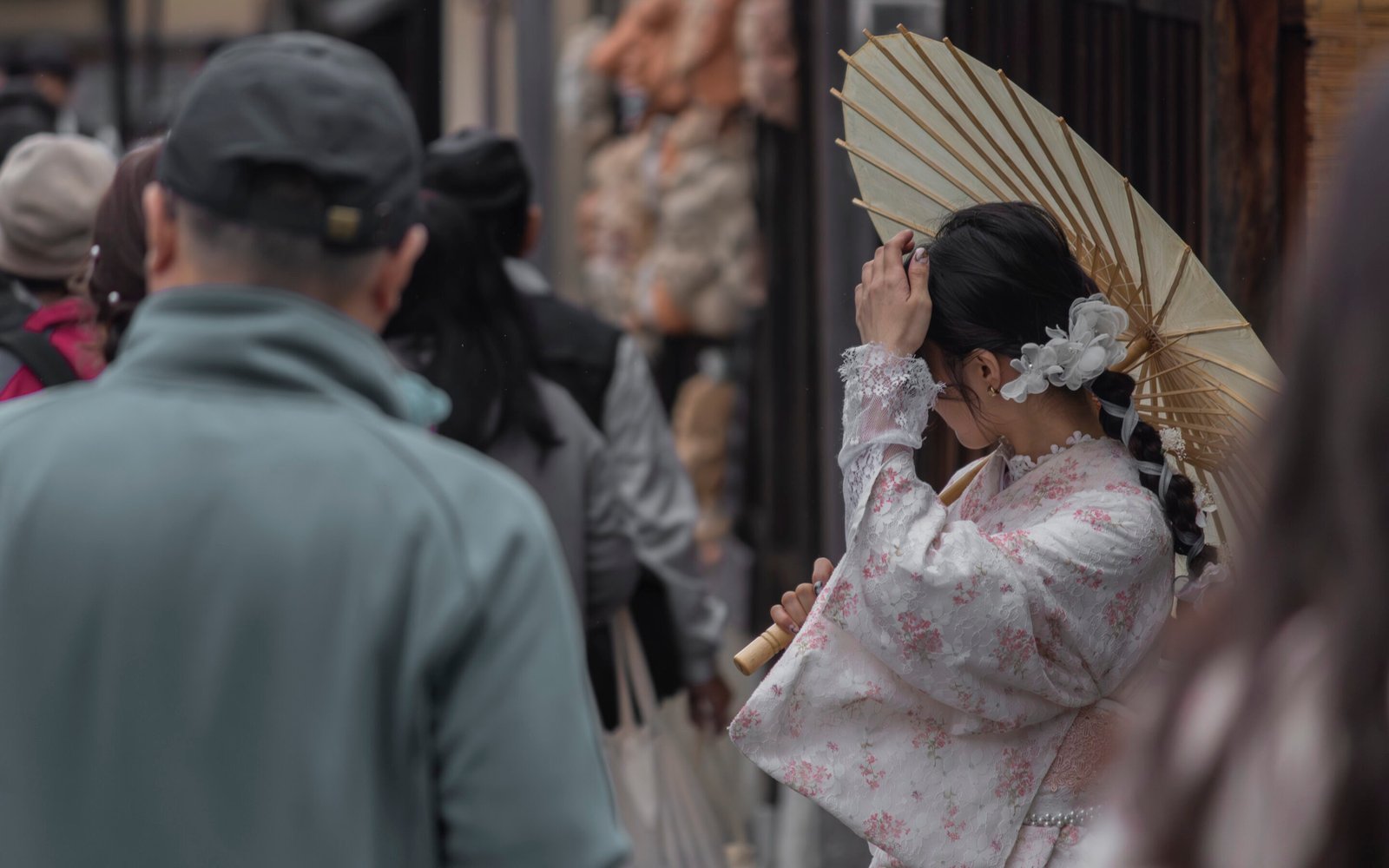
← Back to blogSome photographs simply show a place. And others manage to make you feel like you were there.
For me, that difference is precisely what makes it special. travel photography.
When a magazine, agency, brand, or creator needs an image, they're not always looking for a perfect postcard. Often, they're looking for an atmosphere, a story, or a real-life scene capable of conveying something in just a few seconds.
That's why a good photograph doesn't depend solely on resolution or technique. It also needs intention, context, and a story to tell.
An image can show you a place. But the ones that interest me most are those that manage to make you feel something of what happened there.
Photographs that are born from the journey, not from a list of images that I need to produce
I don't travel simply to photograph places. I travel to experience them.
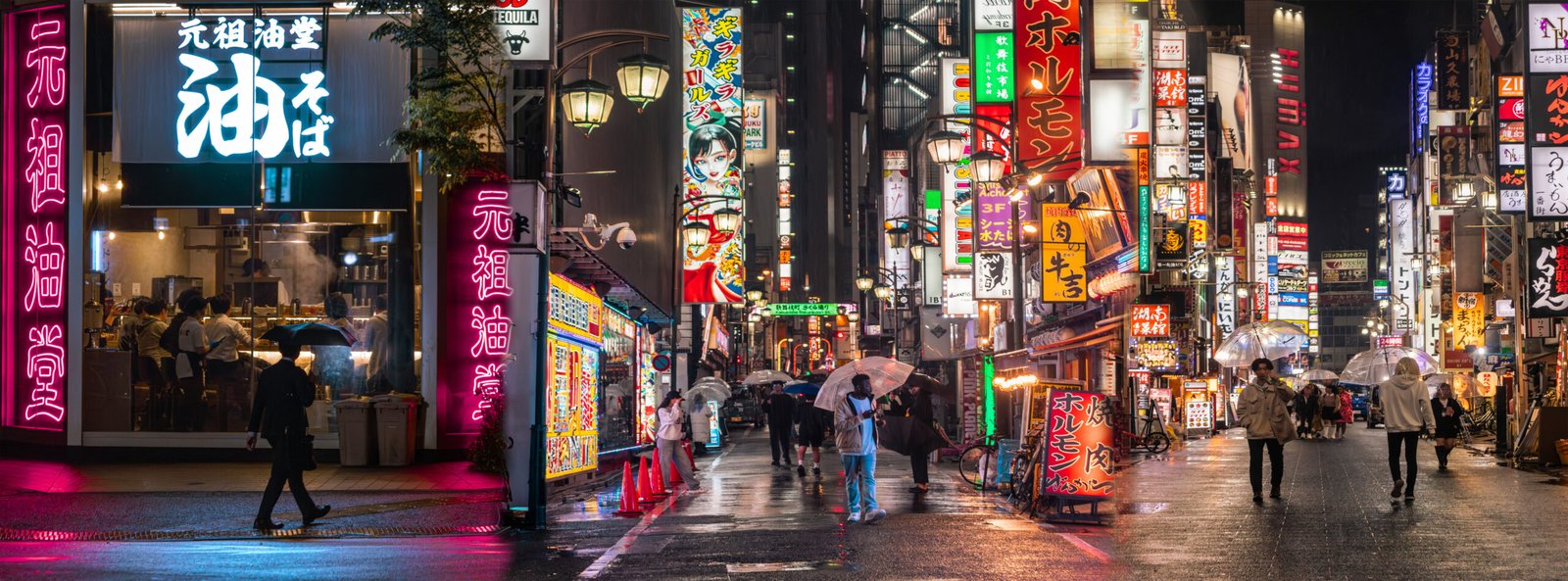
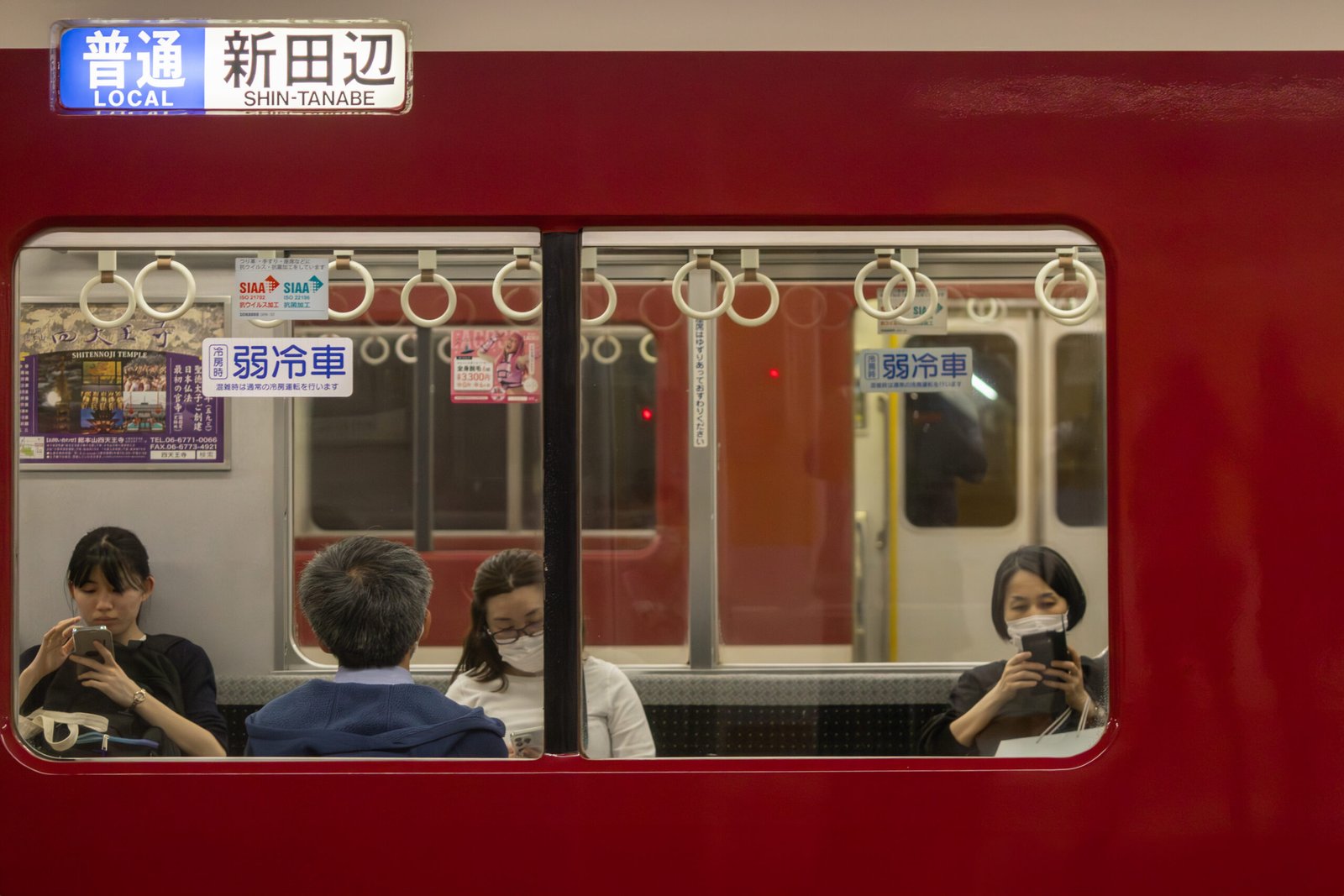
Walking for hours through Tokyo in the rain, finding an unexpected scene in a Kyoto station, waiting for the right light in front of the Edinburgh skyline, or discovering an everyday moment that will probably never be repeated.
Many of my photographs are born this way: without much preparation and, often, without knowing beforehand what I am going to find.
It is a form of photography closer to documentary and urban photography: observe first and shoot later.
Some images appear after waiting a long time in the same place. Others occur for a few seconds. And some weren't even the photograph I had gone out to find that day.
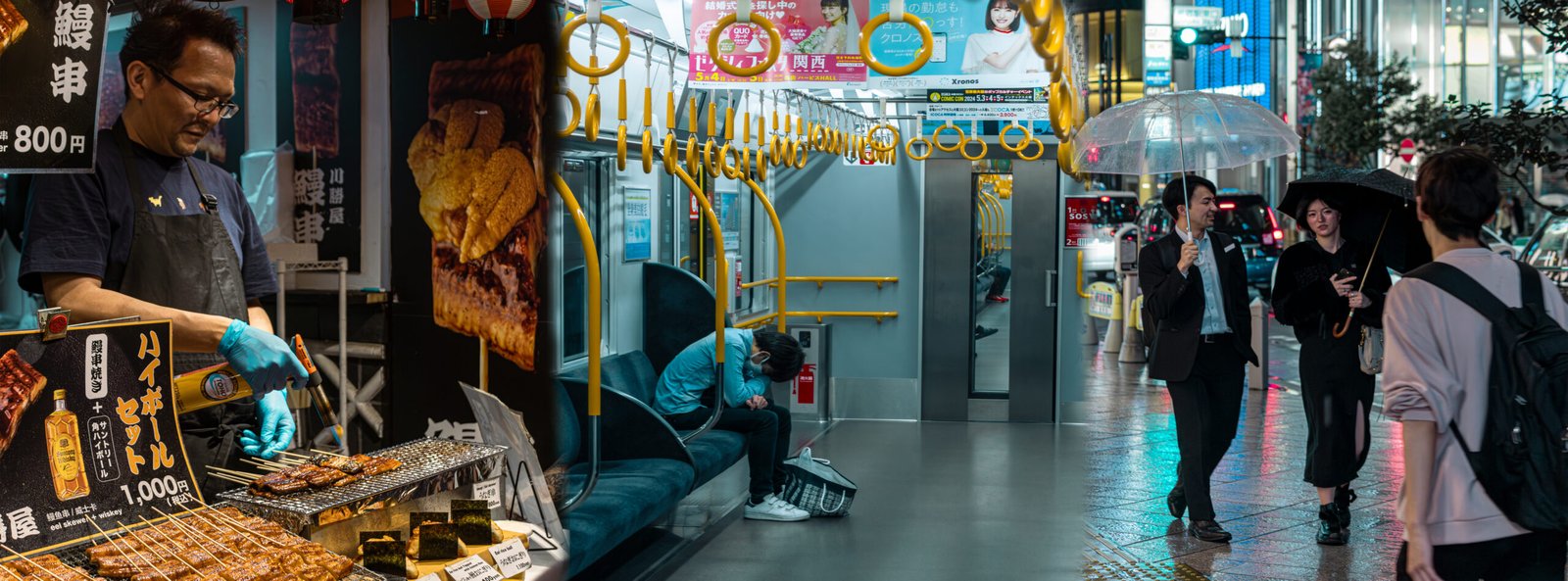
It could be a worker preparing food in Japan, a couple walking in the rain in Tokyo, a person inside a train, or simply a corner of a city that changes completely when someone appears at the right moment.
They are small scenes, but together they tell a story. how a place feels.
When someone uses one of these photographs in a project, they're not just using a pretty picture of a destination. They're using a real fragment of that place and that moment.
The problem isn't finding images. It's finding one that doesn't look like everyone else's.
Today we have access to virtually infinite amounts of photographs.
In just a few seconds you can enter a large image bank, type a few words and find hundreds or even thousands of results.
That has one clear advantage: speed and variety.
But it also has a consequence. Many companies, blogs, agencies, and brands end up searching within the same catalogs.
And when everyone is searching in the same place, the possibility increases that they will end up using similar photographs or even the exact same image.
For certain projects, that doesn't pose any problem.
But when a photograph occupies an important place within a website, a campaign, or the visual identity of a brand, the situation changes.
What large image banks can limit
Large stock photo agencies perfectly fulfill their function. They have enormous catalogs and allow users to quickly meet many visual needs.
But when what you're looking for is differentiation, However, there are also some limitations:
- The same photograph may be available to many customers.
- Several companies may end up using very similar images.
- Part of the catalog may have an aesthetic easily recognizable as stock photography.
- There is less contact with the photographer and with the original context of the image.
- It can be more difficult to maintain a unique visual identity when all brands have access to the same sources.
Buying directly from the photographer changes that relationship.
When you buy or license an image directly from a freelance photographer, you're not just accessing a file.
You know who took the photograph, where it was taken, and what story lies behind it.
You can also directly ask any questions, search for several images from the same series, or find photographs with a consistent aesthetic for the same project.
- Direct contact with the author.
- Access to related collections and series.
- Possibility of locating photographs that have not yet been published.
- Help for selecting multiple images for a campaign.
- Licensing options tailored to specific projects.
- Possibility of studying exclusiveness in specific photographs.
I'm not trying to compete with a catalog of millions of photographs.
What I can offer is something different: a smaller selection, but built from a specific perspective.
EXPLORE PHOTOGRAPHS AND LICENSES →
When a photograph becomes part of a brand
Not all projects require exclusivity.
In many cases a standard license is more than enough.
But if an image is going to become the main photograph of a campaign, website, publication, or visual identity, it may make sense to limit that same photograph from appearing in another project.
That's where the possibility of using a exclusive photography license.
Exclusivity doesn't always have to mean the same thing. It can be adapted to the real needs of each project.
- Temporary exclusivity: The photograph is reserved for a specific period.
- Sector exclusivity: Its use is limited to other companies in a specific industry.
- Territorial exclusivity: Certain uses are restricted within a country or region.
- Exclusivity, broad or total: for projects where photography will play a particularly important role.
This may be of particular interest to marketing agencies, brands, hotels, tourism companies, publishers and advertising campaigns who want to build a more recognizable visual identity.
When a photograph ceases to be merely a resource and begins to identify a campaign, its value within the project also changes.
CHECK EXCLUSIVE LICENSE AVAILABILITY →
Photographs prepared for professional projects
The photographs available for licensing are delivered as high-resolution digital files prepared for different professional applications.
Depending on the photograph and the corresponding license, they can be used in projects such as:
- Magazines and digital publications.
- Articles and editorial media.
- Books and travel guides.
- Web pages.
- Cultural projects.
- Graphic design.
- Communication material.
- Tourism projects.
- Advertising campaigns.
- Branded content.
The quality of a file doesn't simply depend on whether the phrase "300 DPI" appears. To determine if a photograph is suitable for a particular print or format, its pixel resolution and the final size at which it will be used also matter.
If you need an image for a specific format, large print, or a particular adaptation, you can consult me before purchasing the license to check if the file fits the project correctly.
Editorial use and commercial use: what's the difference?
This is one of the most common questions when someone is looking to buy one photography license.
The main difference lies in what will the image be used for?.
License for editorial use
Editorial use is intended primarily for projects whose objective is to inform, document, illustrate, or tell a story.
For example:
- Articles.
- Magazines.
- Journalistic publications.
- Books.
- Documentaries.
- Educational projects.
- Cultural projects.
- Certain digital media.
This type of use is especially common in urban and documentary photography, where people, buildings, brands or other real elements of a city may appear.
License for commercial use
A photograph has commercial use when it is used to promote a company, product, service, or activity.
This could be the case of:
- Advertising campaigns.
- Corporate pages.
- Promotional materials.
- Marketing projects.
- Commercial content.
- Brand communication.
Not all photographs can be automatically used for commercial purposes.
The presence of recognizable people, trademarks, protected works, or other elements may affect available rights, so each image should always be used in accordance with the terms of its license.
Photographs of Japan, London, Edinburgh, Seville and other destinations
My photographic archive continues to grow as I travel and develop new series.
Japan
Tokyo, Kyoto, Osaka, and other places in Japan form one of the most important parts of my work.
I am particularly interested in Japan because of its contrasts: Tradition and technology, neon lights and temples, grand avenues and small corners that seem to live at a different pace.
Tokyo can feel immense and electric. Kyoto, completely different. And between the two, everyday scenes appear, which are often the ones I end up remembering the most.
Many of my documentary and urban photographs have been born from these contrasts.
London
London has a visual identity that is difficult to confuse with any other city.
Architecture, transport, rain, history and a constant mix between the classic and the contemporary appear in many of my photographs.
My collection combines some of its most recognizable locations with urban scenes and moments that occur around them.
Edinburgh
Edinburgh changes a lot depending on the light and the weather.
Its streets, the dark stone, the architecture and the relationship between the city and the landscape create a very particular atmosphere.
It's one of those places where not much needs to happen for a scene to have character.
Seville
Seville is a city that I know in a different way.
Not only because I have photographed it many times, but because I can return to the same places and find something different depending on the time, the light, or what is happening around me.
Contemporary architecture, heritage, streets and everyday scenes are all part of a collection that continues to grow.
And little by little, new cities, countries, and new stories will continue to arrive.
A photograph can completely change how a story is told.
Sometimes we spend hours writing an article, designing a website, or preparing a campaign.
And then we chose the photograph in five minutes.
But often it is precisely the image that a person will see first.
Before the headline. Before the text. Before we even know what we want to tell you.
That's why I believe that choosing a photograph shouldn't simply be the last step of a project.
The image can set the tone, awaken an emotion, or make someone want to linger a little longer.
Photography shouldn't appear after the story has been constructed. It can also be part of how that story begins.
And working directly with me doesn't end when you choose the photography.
For me, there is something particularly interesting about selling my work from my own website.
I know where some of my photographs end up, and the person using them knows who is behind them.
If you have a question, you can ask me directly.
If you need several images with a specific aesthetic, I can help you search within my collections.
If you're looking for a photograph from a specific series that hasn't been published yet, I can check my archive.
And if the project requires a special license or some kind of exclusivity, we can look into it.
That direct contact is also part of what I want to offer.
Explore my travel photo archive
In my collection you can find urban, documentary and travel photography made during my travels through different cities and countries.
Architecture, culture, streets, landscapes and everyday moments.
Scenes that happened once and will probably never be repeated in exactly the same way.
You can purchase the available photographs under the corresponding license for use in editorial or commercial projects.
And if you're looking for something specific, need several images for the same project, or want to check a possible exclusive license, You can contact me directly.
I don't travel to describe places, but to share lived experiences.
VIEW PHOTOGRAPHS AND LICENSES →
Frequently asked questions about photographs and licenses
Can I use the photographs on a website?
Yes, provided that use is covered by the license purchased. The type of license required will depend primarily on whether the project is for publishing or commercial purposes.
Can I use a photograph in a magazine or article?
Photographs available for editorial use may be used in projects covered by the corresponding license.
Can I use the images for advertising?
For advertising or business promotion you will need a photograph that allows commercial use and the corresponding license.
Not all documentary photographs can be used commercially, so it is important to check the specific conditions of each image.
Are the photographs delivered in high resolution?
Yes. The photographs available for licensing are offered as digital files prepared for professional use.
Can another company use the same photograph?
Standard licenses may allow the same photograph to be licensed to different clients.
If you need to limit future use by other customers, the availability of a exclusive license.
Can I get a photograph exclusively for my company or campaign?
In certain photographs, an exclusive license may be considered.
Conditions may vary depending on duration, territory, sector, intended use and selected photograph.
Can I print a photograph that I purchased as a digital file?
It depends on the type of license purchased.
Purchasing a license to use a photograph within a project does not necessarily imply authorization to produce copies, products, or prints intended for sale.
If you're looking for a photograph to decorate your home or workspace, you can also check out my collection of Fine Art Prints.
What happens if I need multiple photographs for the same campaign?
You can contact me directly.
If you are looking for several photographs that share a particular aesthetic, destination, atmosphere, or style, we can explore which images from my archive best suit your project.
What happens if I can't find exactly the photograph I need?
You can also tell me what you're looking for.
It is possible that there is a photograph within my archive that is not yet published on the web or that one of my collections may be suitable for the type of image your project needs.